
East Devon Line Rail Ale Trail – Scenic Train, Historic Pubs & Real Ale Adventure
Discover the East Devon Line Rail Ale Trail, a scenic railway journey from Salisbury to Exeter with stops at 19 characterful pubs across Wiltshire, Dorset, Somerset and Devon. Enjoy local real ales, charming country inns, and beautiful West Country landscapes on a safe, car-free pub crawl by train. Perfect for beer lovers, rail enthusiasts, and anyone seeking a unique adventure in Southwest England.
ALE TRAILS
Introduced in May 2024, the East Devon Line Rail Ale Trail is a unique journey for beer lovers and train enthusiasts alike. This self-guided trail spans 19 pubs across four counties – from the medieval city of Salisbury in Wiltshire all the way to the historic cathedral city of Exeter in Devon. Along the route, which roughly follows the scenic South Western Railway line between Salisbury and Exeter, “Trailers” (as participants are affectionately known) can hop off at charming towns and villages to visit pubs mere minutes from the stations. Each stop offers a chance to enjoy locally brewed real ales, hearty pub food, and a slice of local character – all without the need for a car. In fact, the Rail Ale Trail was created to encourage safe, sustainable travel: you can savour a pint or two at each pub without worrying about driving (or “going over the limit”), thanks to convenient train links. The result is a memorable West Country adventure that blends beautiful countryside, historic pubs, and great beer in one package.
A Journey Through Four Counties – From Salisbury to Exeter
Spanning approximately 90 miles of railway, the trail’s route is often described as a journey “from Cathedral to Cathedral” – linking Salisbury Cathedral at one end to Exeter Cathedral at the other. In between, the train winds through the heart of Southwest England, treating travellers to views of rolling green countryside, wooded valleys, and quaint market towns. The line (sometimes called the West of England Line) crosses four counties: starting in Wiltshire, dipping into Dorset and a corner of Somerset, and finally traversing East Devon on the way to Exeter. This diversity in landscape means your window scenery changes by the mile – from the chalk downs near Salisbury to the lush Blackmore Vale in Dorset, then into the Devon hills as you approach Exeter. It’s a delightful backdrop for a rail journey, especially when paired with the anticipation of a cosy pub at the next stop.
Not only is the scenery attractive, but the route is rich in history. For example, one optional excursion on the trail is a short bus hop from Gillingham station to the hilltop town of Shaftesbury, Dorset, famed for its Gold Hill (the steep, picturesque street from the “Hovis bread” advert). Here you’ll find The Ship Inn, a Grade II-listed pub known for its real ales and friendly atmosphere. Including Shaftesbury, albeit via a quick bus ride, is a bonus that broadens the trail’s appeal – you get to sample a pub in a historic town not directly on the rail line, all in the same adventure. Back on the train, the railway itself has historical significance: it was once a primary route of the London & South Western Railway, and remnants of old stations and Victorian infrastructure can be spotted along the way, adding a nostalgic charm to your journey. By the time you roll into Exeter, you’ll have traversed centuries of history and culture – and hopefully discovered a few new favourite pubs as well.
Pubs on the Trail: 19 Characterful Stops for Real Ale Lovers
One of the joys of the East Devon Line Rail Ale Trail is the sheer variety of pubs you can visit. The 19 participating pubs range from medieval ale houses to modern micro-pubs, each offering something unique. Starting in Salisbury, you can kick off your trail at the Haunch of Venison – probably the oldest pub in Salisbury and certainly the most haunted, according to local lore. This 14th-century tavern, with its oak beams and open fires, has enough character (and ghost stories) to fill a book. It’s also a noted CAMRA real ale pub, so you’re guaranteed a well-kept pint of local brew to begin your adventure. From Salisbury station, it’s about a 10–15 minute walk through the historic city centre to reach this atmospheric inn – a worthwhile detour before you even board your first train.
Heading south-west into the Wiltshire countryside, the train’s next stop with pubs is Tisbury, a peaceful village where two charming pubs await. The Benett Arms, perched on the high street overlooking the village, is a lively local pub at the heart of the community. It doesn’t serve food, but makes up for it with convivial atmosphere and occasional local ale festivals. Just down the road is The Boot Inn, a 17th-century inn that prides itself on a traditional social vibe and a good-value bar menu. Many walkers and cyclists frequent these pubs, as Tisbury lies in great walking country. Both are within ten minutes’ walk of Tisbury station, making it easy to pop out for a pint and rejoin the next train.
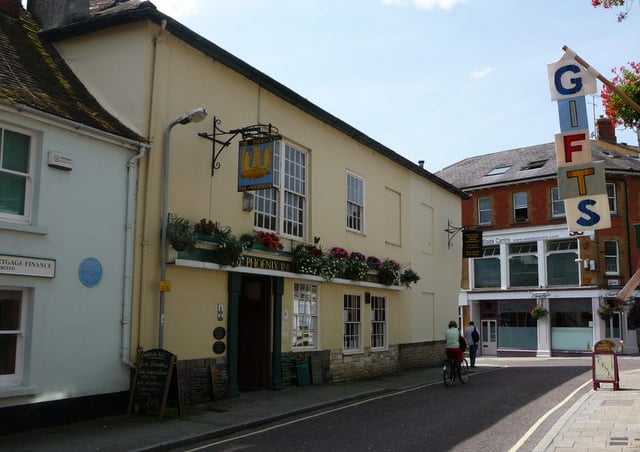
The trail then crosses into Dorset. In Gillingham (Dorset’s most northerly town), you have two contrasting options. The Phoenix Inn is a Grade II-listed pub located on the town square, known for its local real ales and historic character, albeit offering no food. A short stroll away is The Red Lion, another Grade II-listed 16th-century pub with oak beams and a reputation for good cask ales. The Red Lion does serve food, and its classic British pub grub can be a nice addition if you’re peckish. Gillingham is easily walkable, and both pubs are under 10 minutes from the station. If you have time here midday, Shaftesbury (with The Ship Inn mentioned earlier) can be reached by a daytime shuttle bus – a detour for those keen on exploring a bit more of Dorset’s pub scene. The Ship Inn itself is an award-winning CAMRA pub that will reward you with a well-earned ale after the short uphill journey.
Next, the train crosses into a slice of Somerset. Sherborne, just over the Dorset border in northwest Dorset (historically part of Somerset), is a highlight for many. This beautiful town – famous for its abbey and two castles – offers the Digby Tap, a traditional 17th-century pub tucked away down a lane near the station. The Digby Tap has stone floors, an open fire, and has been a winner of local CAMRA Pub of the Year in the past. It’s the quintessential no-frills alehouse where conversation flows as readily as the beer. Note that the Digby Tap serves food only at lunchtimes, so plan accordingly if you visit around midday. A quick 4-minute walk from Sherborne station gets you to this pub – you might even see it (or certainly smell the hops) as your train pulls in.
Farther along, at Crewkerne (which is in Somerset, although the station is actually just across the border in Dorset!), you’ll find The Globe Inn in the village of Misterton adjacent to Crewkerne. The Globe is a 17th-century village inn known for its real ales and friendly service. It’s about a 10-minute walk from Crewkerne station. By this point on the trail, you’re well into rural surroundings, and sipping a pint in The Globe’s cosy interior or beer garden can feel like a delightful step back in time.
Once the train crosses into Devon, the pub options multiply. Axminster – the first Devon stop – is a bit of a rail ale trail capital of this line, boasting three pubs on the list. Uniquely, one of them is right on the station platform: The Ale Way, a micropub located at Axminster railway station itself. As soon as you step off the train, you can step into this little pub which showcases a rotating selection of independent real ales, craft beers, and ciders. It doesn’t serve food, but with such a prime location and ever-changing taps, it’s a must-visit for ale enthusiasts – you’re literally drinking at the station. A short walk into Axminster town (10–12 minutes from the station) brings you to two more excellent pubs: The Axminster Inn and The Castle Inn. The Axminster Inn is a traditional pub with a loyal local following, complete with a log fire for winter and an enclosed beer garden for summer, and it was crowned Exeter & East Devon CAMRA Pub of the Year 2022. Just up the hill, The Castle Inn offers something a little different – it has a castle-themed charity beer garden and a strong reputation for home-cooked food and Sunday roasts. Between these three, Axminster alone could occupy an entire afternoon of your trail (and perhaps warrants a dedicated trip back!).
Continuing into East Devon, the next major stop is Honiton, another bustling market town. Honiton’s entry on the Rail Ale Trail is the Vine Inn & Tea Room, a family-run pub tucked away down an alley off Honiton High Street. The Vine Inn is known for its cosy, cottage-like interior and a pretty beer garden, offering a pleasant retreat from the busy town centre. It serves lunch (but no evening meals), and indeed the pub’s tea room aspect means you might even drop in for a cream tea before switching to ales! This pub was significant as the Devon launch venue for the trail – local community rail officials gathered here in May 2024 to celebrate the new initiative. When you visit, look out for any Rail Ale Trail memorabilia or the special ale that may occasionally be brewed to commemorate the trail.
Further down the line in the small village of Feniton, you’ll encounter a true “railway pub” in every sense. The Nog Inn sits right opposite Feniton station – you can practically wave to the train driver from the pub’s front door. The Nog Inn is an old-fashioned, locals’ pub – no food here, limited opening hours (mostly weekends), but brimming with authentic village atmosphere. It’s the kind of place where on a Sunday lunchtime you might find a group of regulars engaged in lively banter over their pints of bitter. Despite its modest size, the Nog Inn’s proximity to the station makes it an easy quick stop. (Tip: If you arrive and find it closed, don’t fret – the next train isn’t far off, and there are more pubs ahead!)
Just one stop along is Whimple, a rural East Devon village that’s home to the New Fountain Inn. This pub has a special story: it’s a newly restored free house that was rescued and renovated by the local community. Now it prides itself on offering the warmest of welcomes and has become a real focal point in the village. The New Fountain Inn does serve food (Wednesday to Sunday), including classic pub favourites and Sunday lunches, making it a good candidate for a meal stop. It’s about 8 minutes’ walk from Whimple station along country lanes – a pleasant little stroll to build your appetite. Whimple itself is known historically for its cider production (once home to a big cider factory), so you might also seek out any local cider on tap here for a change of pace from beer.
The trail even extends to the new community of Cranbrook, a recently built town in East Devon. The pub here, The Cranberry Farm, stands out as a modern contrast to some of the ancient inns elsewhere. It’s a Hall & Woodhouse house, meaning it specialises in Badger beers (brewed in Dorset), and offers a more gastro-pub style menu. With its sprawling interior and family-friendly beer garden, Cranberry Farm is a great example of how the Rail Ale Trail isn’t only about old pubs – it’s about good pubs of any age. Note that it’s a bit of a longer walk (around 25 minutes from Cranbrook station) due to the station’s location on the edge of town. However, if you’re up for it (or perhaps grab a local bus or cycle), you’ll be rewarded with a hearty meal and well-kept Badger ales like Tanglefoot or Fursty Ferret on draft.
As you approach Exeter, the penultimate stop is Pinhoe on the city’s outskirts. Here the trail guide directs you to the Heart of Oak, a family-friendly pub just a 3-minute walk from Pinhoe station. It’s a community pub known for its regular events and ample food service (they do meals daily at lunchtime, and beyond). While Pinhoe might not be a typical tourist stop, for trail completists it’s an easy stamp to collect and a chance to mingle with Exeter locals in a suburban setting.
Finally, Exeter itself offers a trio of excellent pub stops to cap off the journey. By the time you reach Exeter St Davids (the main station), you might be ready to slow down – and the Exeter Brewery Tap Room is just the place. Located only six minutes’ walk from St Davids station, this taproom is part of the Exeter Brewery and serves the full range of their ales right at the source. From a zesty golden ale like Avocet Ale to heartier stouts and IPAs, you can taste Exeter’s local brewing scene fresh from the cask. (It’s often open only later in the week – e.g. Thursday and Friday evenings – so check ahead.) If your trail day is a Thursday or Friday, timing your Exeter arrival for the evening here is ideal.
Exeter is blessed with many pubs, but the Rail Ale Trail picks two more to ensure you experience different facets of the city. The Mill on the Exe is a beautiful waterside pub situated next to the River Exe, roughly halfway between St Davids and Exeter Central stations. If the weather’s fine, its riverside garden is a glorious spot to unwind – watching the river tumble by under the adjacent Blackaller Weir while you enjoy a pint. The Mill on the Exe is a larger establishment, offering a full food menu (from breakfasts to dinner) and a wide range of drinks. It’s popular with locals for its scenic setting and spacious outdoor terraces. Meanwhile, in Exeter’s city centre (a short walk from Exeter Central station) lies The White Hart, a historic former coaching inn hidden away on South Street. The White Hart is one of those places you might not stumble upon unless you know – it’s tucked behind an archway – but it’s actually one of Exeter’s oldest pubs. With a warren of cosy rooms and a quiet courtyard, it’s often called “Exeter’s best kept secret”. Here you can reflect on your Rail Ale Trail journey over a well-deserved final pint. The White Hart’s menu of classic pub fare and its vintage ambiance provide a satisfying full stop (or shall we say exclamation point?) to the trail.
From start to finish, the 19 pubs on the trail each contribute to the experience. You’ll encounter different local beers (many pubs highlight regional breweries from Wiltshire, Dorset, Somerset, and Devon), various settings from rural to urban, and the friendly faces of landlords and fellow pubgoers who are often eager to chat – especially when they learn you’re on the ale trail. The common thread is authenticity: these are all much-loved local pubs, not generic chain bars, and they each reflect a bit of the local culture and history. Don’t forget to get your stamp at each one!
How the Rail Ale Trail Works: Stamps, Rewards & Railway Tips
While the Rail Ale Trail is inherently simple – ride the train, visit pubs, enjoy ales – the organisers have added a fun incentive to encourage participants to visit multiple locations. Here’s how it works: at each participating pub, you can collect a stamp in a special Rail Ale Trail booklet or stamp sheet. To get a stamp, just buy a drink (alcoholic or non-alcoholic, it’s up to you) and show the bar staff your Rail Ale Trail stamp sheet and a valid train ticket for that day. The idea is to prove that you arrived by train – it’s all about promoting railway use, after all. Once you make your purchase, the pub will stamp your sheet with their unique stamp or sticker. If you’re also eating a meal, that counts too: one of the required stamps can be from having a meal at a pub on the trail (useful if perhaps you have a designated driver with you who isn’t drinking, or you simply want to savour the local cuisine).
After you’ve collected 10 stamps (not necessarily all 19, just any ten different pubs), you become eligible for a special prize: a Rail Ale Trail T-shirt. This free T-shirt is a fun memento – it usually features the Rail Ale Trail logo and proves your dedication in completing the challenge. According to the official rules, you can claim your shirt by sending in your stamped sheet along with your train ticket(s) to the Devon & Cornwall Rail Partnership (the organisers). They’ll then post you the T-shirt (UK postage is included). Many “trailers” proudly wear these shirts as a badge of honour – and as an advertisement for the trail itself. The colour of the T-shirt can vary and new designs may come out each year, adding a bit of collectability for repeat adventurers.
Importantly, you do not have to complete all 19 pubs to participate or to get a reward. Ten stamps is enough for the prize, which keeps the challenge achievable. Of course, many enthusiasts aim to visit all 19 eventually for the personal satisfaction (and bragging rights). In fact, the trail’s organisers explicitly encourage taking your time and NOT trying to do everything in one day. With nearly twenty pubs on the list, attempting them all in a single go would not only be impractical – it would defeat the purpose of enjoying a leisurely outing. The motto is to “take it easy”: sip, savour, and stretch the trail over multiple days or trips as suits you. This also means you can plan different segments on different occasions – for example, you might do the Salisbury to Sherborne stretch one weekend, and the Axminster to Exeter portion on another. The Rail Ale Trail is as flexible as you want it to be.
Since this trail is all about using the train, it’s worth noting a few rail travel tips that can enhance your experience. Firstly, check the train times and frequencies for the West of England Line (Salisbury–Exeter) on your intended day. On this line, trains generally run hourly (with some variations at certain times), so it’s quite convenient to hop on and off without a long wait. Nevertheless, having a timetable handy or a rail app on your phone is wise – some of the rural stations have limited facilities, and mobile signal can be patchy in the countryside, so a printed timetable or screenshot is good backup. Secondly, group travel can save money: if you’re travelling with friends (3 to 9 people), ask for GroupSave tickets which give about one-third off the fare for everyone. If you’re solo or a pair, a Railcard (such as the Network Railcard or Two Together Railcard) can also cut costs by a third. The trail is an enticing trip, but it’s even better when you know you got a good deal on your travel. Additionally, South Western Railway offers special Evening Out or Sunday Out return tickets on this route – these are cheap day returns valid after midday on weekdays or all day Sunday, respectively. They can be combined with Railcards for further discounts, making an afternoon pub crawl or a Sunday lunch outing on the trail quite affordable.
Another tip: always double-check pub opening times before you travel. Rural pubs may have limited hours (e.g. some don’t open until late afternoon on weekdays, or close in the afternoon between lunch and dinner). Seasonal changes, holidays, or staff shortages can also affect hours. The Rail Ale Trail official booklet/website lists contact info for each pub – it’s a good practice to call ahead or verify on their websites/Facebook, especially if you have a particular pub in your sights. If you’re coming with a larger group, giving the pub a heads-up is courteous and often appreciated; small village pubs will be glad to know if a dozen thirsty ramblers are about to descend upon them at once!
Finally, don’t forget your stamp sheet! It sounds obvious, but you’d be surprised how many travellers tuck into their first pint and only then remember the stamp card in their bag. Keep it handy, and politely ask for a stamp during a quiet moment at the bar (this avoids inconveniencing bar staff during a rush). Most bartenders along the trail are very familiar with the scheme – some may even engage in a friendly chat about how many stamps you’ve got and which pub you’re off to next. It’s all part of the camaraderie of the trail.
A Boon for Local Communities and Ale Enthusiasts
What makes the East Devon Line Rail Ale Trail special is not just the personal adventure it offers, but also the positive impact on local communities. This project is a collaboration between the Devon & Cornwall Rail Partnership and the Blackmore Vale Line Community Rail Partnership, in partnership with South Western Railway. Both partnerships are non-profit groups devoted to promoting rural rail lines and the communities they serve. By launching this trail, they aimed to breathe new life into the pubs along the Salisbury–Exeter route, many of which are small independent businesses that form the social backbone of their towns and villages. At a time when, sadly, an average of 16 pubs close every week in the UK, initiatives like this encourage people to discover and support pubs they might otherwise never visit.
And it’s working. Since the trail’s launch in May 2024, it has gained national recognition as an innovative tourism and leisure initiative. It even won a Certificate of Excellence in the Tourism & Leisure category at the Community Rail Awards in Newcastle, just a few months after its inception. The award highlighted how a classic idea – the “rail ale” concept – was reinvigorated and expanded through modern marketing (such as a dedicated website, social media, and a refreshed design) to attract a new generation of participants. In the summer following the trail’s launch, the results were telling: 75 T-shirt prizes were awarded to completers in just a few months, triple the number of the previous summer (when only the older trails were running). Those prize-winners alone accounted for 688 pub visits and 53 meals purchased along the line, injecting thousands of pounds into the local pub economies. And that’s not counting the many people who partially did the trail without claiming a shirt – meaning the true impact is even greater.
Local authorities have also voiced support. Councillor Phil Twiss, representing Honiton, praised how the trail “highlights the ease of travelling by rail to visit places people might not ordinarily have considered”, citing Honiton as a great example of a town with plenty to offer that’s now getting more visitors. The social aspect is key: each visit to a pub isn’t just a chance to drink, but to chat with locals, learn local history, and experience the hospitality of these communities. As Derek Beer, chairman of Blackmore Vale CRP, put it, “our pubs and inns are the heart of our rural towns and villages, and a visit so often unlocks a host of local information and history”. Many pubs have signage or knowledgeable staff who can tell you about the area – from the legend of a resident ghost at the Haunch of Venison, to the history of Honiton’s lace-making, or the story behind Axminster’s famous carpet industry. In this way, the ale trail becomes a cultural journey as much as a beer tour.
Equally important, the Rail Ale Trail promotes responsible enjoyment of alcohol and the countryside. By using the train, participants inherently avoid the risks of drink-driving, making the roads safer for everyone. The organisers emphasise responsible drinking – spacing out your pints, eating food, and respecting other passengers and pubgoers. You’ll find that the camaraderie among rail ale trailers often leads to a polite and cheerful atmosphere, rather than rowdy behaviour. In fact, the expectation that trailers behave considerately is built into the culture of the event – after all, this is about appreciating fine ales and great places, not a drunken bender. Many participants are members of CAMRA or just beer aficionados who take their tasting seriously. Of course, anyone can take part, but the unwritten code is “enjoy, don’t destroy” – leaving each pub and train as welcoming for the next person as it was for you.
Tips for an Unforgettable Rail Ale Trail Experience
To make the most of your East Devon Line Rail Ale Trail, consider a few practical tips and tricks gleaned from those who’ve completed it:
Plan your itinerary but stay flexible: With so many pubs, it’s wise to pick a subset for each outing. Maybe focus on 3-5 pubs in a day, depending on your pace. Use the rail timetable to plot a sensible route – factor in train frequency and the walking time to each pub. However, allow for serendipity. If you stumble into a pub that you love, there’s nothing wrong with lingering longer and catching a later train, even if it means skipping the next planned stop. The trail isn’t a race; it’s about enjoyment.
Start late morning or around lunchtime: Many pubs (especially in the countryside) won’t be open early. A good strategy is to catch a mid-morning train to your starting point, aim to hit the first pub around opening time (lunchtime), and then you have the whole afternoon and early evening to meander to a few more. For instance, you might start in Salisbury late morning (breakfast there, a quick look at the cathedral), have your first pint by noon, then continue. Or begin in Exeter and work backwards – there’s no rule saying you can’t do it in reverse!
Stay hydrated and fed: It’s easy to get caught up collecting stamps and forget to drink water. Carry a bottle of water with you or at least alternate some non-alcoholic drinks. Many pubs on the trail offer tea, coffee, or soft drinks as well – and there’s no shame in pacing yourself. Likewise, sample the food when you can. Whether it’s a hearty ploughman’s lunch in a village inn or a bag of crisps to nibble on the train, a bit of sustenance keeps you going. Some trail-goers make a point of enjoying a Sunday roast at one of the pubs (The Castle Inn in Axminster and the White Hart in Exeter are known for good roasts, for example), turning the day into a gastronomic tour too.
Engage with others: If you spot fellow travellers carrying the same stamp sheet, say hello! You might end up comparing notes or even teaming up for a portion of the journey. The Rail Ale Trail has a way of bringing strangers together over a shared love of beer and trains. Don’t hesitate to chat with pub staff as well – they might have interesting stories or recommendations for other local attractions (maybe a nearby brewery, a scenic walk, or a quirky museum) that you could incorporate into your trip.
Consider weekdays vs weekends: The atmosphere can vary. Weekdays might find pubs quieter, with more local patrons, and trains less crowded – a relaxed vibe. Weekends will be livelier; you might encounter events like live music or beer festivals at some pubs (summer weekends especially), and the trains will carry more tourists and day-trippers. Both are enjoyable in their own way. Just remember that on Sundays the train service may be less frequent and some pubs have shorter opening hours, so plan accordingly.
By keeping these pointers in mind, you’ll ensure your ale trail adventure is both enjoyable and logistically smooth.
Conclusion: All Aboard for Ales and Adventure
In sum, the East Devon Line (Salisbury–Exeter) Rail Ale Trail offers an extraordinary way to explore the south-west of England. It combines the simple pleasure of a train ride through picturesque landscapes with the convivial experience of visiting characterful pubs steeped in local charm. By seamlessly blending pub culture with train travel, the trail creates something more than the sum of its parts – it’s both a celebration of Britain’s railway heritage and its beloved beer tradition. From the haunted halls of Salisbury’s oldest inn to the sunlit beer gardens of Exeter, each stop tells a story and invites you to be a part of it.
Perhaps what’s most remarkable is how this trail manages to cater to a wide audience. For the real ale connoisseur, it’s a chance to sample a cross-section of West Country brews and pub styles – all in one curated route. For the rail enthusiast, it’s a delightful excuse to ride a lesser-known but scenic line, replete with Victorian stations and rural branch line charm. For local explorers or visitors from farther afield, it’s an accessible adventure – you don’t need a car, just a railway ticket and a spirit of discovery. And everyone, from solo travellers to groups of friends, can appreciate the laid-back pace and camaraderie that comes with the Rail Ale Trail. It’s as social or as solitary as you want it to be: you might strike up new friendships en route, or simply enjoy a peaceful pint in a countryside tavern garden listening to the birds.
The trail’s early success and the enthusiasm it has generated (with participants coming from as far away as London, the Shetland Islands, and even abroad) suggest that this concept has tapped into something special. In an era when we’re all looking for authentic experiences, the Rail Ale Trail stands out as genuine, unpretentious fun. It’s about slowing down and savouring life’s simple pleasures – a good journey, a good drink, and good company. Plus, there’s a sense of accomplishment in collecting those stamps and earning your T-shirt; you become part of a growing community of “trail alumni” who’ve shared in the same pilgrimage of pints.
So, if you’re craving a break from the ordinary day out, the East Devon Line Rail Ale Trail is calling. Grab your stamp sheet, pack your rail timetable, and put on some comfortable walking shoes. Whether you aim to conquer all 19 pubs or just cherry-pick a few favourites for a day trip, you’re in for an unforgettable ride.
© 2026. All rights reserved. All other trademarks and copyrights are the property of their respective holders.
Please drink responsibly. This website promotes pub culture and community responsibly. If you or someone you know needs support, visit https://www.drinkaware.co.uk