
The Laurieston - Glasgow - Pub Review
Read our Pub review of The Laurieston in Glasgow. Explore its atmosphere, food and drink offerings, customer service, and unique features.
REVIEWSGLASGOW
7/4/202614 min read
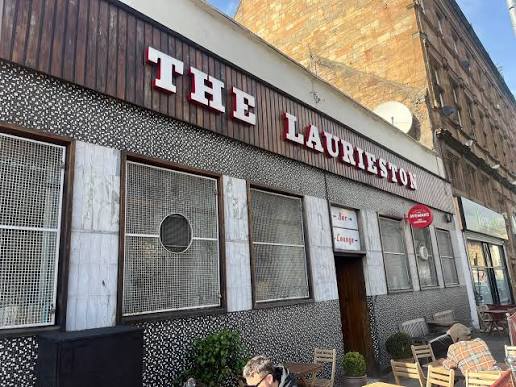
The Laurieston on Bridge Street is one of those rare Glasgow pubs that feels like a genuine find even though it has been admired for years. Sitting at 58 Bridge Street, right by the Bridge Street subway stop on the south side of the Clyde, it has the kind of plain, low-slung exterior that tells you almost nothing about what waits inside. Step through the door, though, and you are in a near-intact 1960s pub interior built around an island bar, split between a public bar and lounge, with Formica, timber panelling, fixed seating, period lighting and all the small details that make a historic pub feel alive rather than curated. Historic Environment Scotland lists it as a Category C building and describes it as a rare survival of a comprehensive 1960s decorative scheme, while CAMRA classifies it as a Real Heritage Pub.
For anyone searching for the best pubs in Glasgow, the best Southside pubs, or a classic Bridge Street pub with real character, The Laurieston more than earns the attention. It was named among the best pubs in the UK by Time Out in 2024, where it topped the list, and it also landed at number 32 in the European Bar Guide’s Top 100 Bars in Europe for 2025. That combination of heritage, atmosphere and serious drink credibility tells you a lot about why this unassuming corner pub keeps attracting locals, beer lovers, architecture enthusiasts and curious first-timers alike. Current opening hours listed by CAMRA are 11:00am to 11:00pm Monday to Saturday and 12:30pm to 11:00pm on Sunday.
Facilities & Entertainment
The first thing to understand about The Laurieston is that its biggest attraction is not a gimmick, a themed menu or a packed programme of pub games. The pub itself is the entertainment. Historic Environment Scotland notes that the interior is organised around an earlier island bar, with the entrance leading into a small off-sales section, the public bar to the left and the lounge to the right. That split-room arrangement matters because it gives the pub a slightly different mood depending on where you settle. The public bar has timber flooring, bench seating and the famous small fixed Formica tables, while the lounge is a touch softer and more relaxed, with carpet, deeper banquette seating and even surviving bell pushes for table service. It is a proper old-school Glasgow bar in the best sense, built for conversation, pints and unforced socialising rather than trend-driven spectacle.
CAMRA lists the pub as dog friendly and notes useful everyday touches such as Wi-Fi, newspapers, cask ale and separate bar areas. Those details fit the wider feeling of the place. This is a pub to sit in, not just pass through. You can imagine an afternoon paper and pint being just as natural here as a lively evening session before a gig. The off-sales section is also a distinctive survival from an earlier era, something Historic Environment Scotland specifically highlights as an unusually late example of that feature. For people who enjoy heritage pubs, authentic Glasgow bars and spaces that still reflect how working pubs used to function, The Laurieston offers a lot more than surface nostalgia.
That said, The Laurieston is not frozen into silence. Its social media regularly points people towards what is happening around the pub, from theatre and live music to big sports fixtures, and in 2026 it promoted Scotland match screenings with a late licence. So while this is not a modern sports bar covered in screens and promos, it is very much plugged into the life of the surrounding area. The balance is part of the appeal. It remains a traditional Glasgow drinking pub first, but one that knows how to catch the pulse of the neighbourhood when there is a big game, a concert nearby or a reason for the area to feel lively.
There is also outside space now, which adds another welcome layer. In August 2024 the pub announced the opening of a new beer garden, giving regulars and visitors a place to take advantage of rare Glasgow sunshine or simply step out with a pint. That matters because old city pubs with a strong indoor identity do not always offer much outdoor seating. Here, the addition improves the venue without diluting what makes it special indoors. If you like the idea of a historic Glasgow pub with a beer garden, The Laurieston now has that box ticked too.
Food on Offer
If you are looking for an extensive gastropub menu, The Laurieston is not trying to be that. Its food offering is part of its charm precisely because it stays true to the spirit of the place. CAMRA’s detailed pub description notes that there is still a circa-1960 heated glass food display unit on the counter and that it remains in use for hot pies and bridies. Other pub heritage references also point to the survival of the old McGhee’s hot pie cabinet, which has become one of the most photographed and talked-about details in the room. In a city where plenty of pubs now chase the same burger-and-small-plates formula, The Laurieston feels refreshingly confident in a simpler idea of pub food.
That simplicity does not mean the food is an afterthought. Quite the opposite. The hot pie cabinet is part of the pub’s identity, and it gives the bar a warmth and practicality that suits the room perfectly. A hot Scotch pie, or a bridie if available, is exactly the sort of comforting, unshowy snack this kind of pub should serve. CAMRA’s notes specifically praise the pie with peas and gravy, which tells you everything about the mood here. This is hearty, nostalgic, pub counter food, and it belongs to the setting. It also makes The Laurieston especially appealing if you want a quick bite with your pint rather than a full sit-down meal that takes over the whole visit.
There is a strong argument that The Laurieston’s food offer works so well because it understands its role. This is one of the best traditional pubs in Glasgow for atmosphere, heritage and drink, so the food does not need to overcomplicate things. Instead, it complements the bar. You can arrive for a cask ale, a Guinness, a dram or a chat, and if hunger appears, there is something hot, filling and very much in keeping with the place. That old-fashioned practicality is part of what makes this Bridge Street pub feel so genuine.
Value is another reason the food side of the pub gets noticed. Recent footage shared online showed signage for a pie at £2 and pie with peas and gravy at £3, which is the kind of pricing that feels almost astonishing in a pub with this reputation and location. Even allowing for future changes, it illustrates the point that The Laurieston has not tried to turn its heritage into a premium gimmick. The same goes for its whisky promotions, with official “Malt of the Month” posts advertising selected drams at £4 for 35ml. There is a welcome sense here that quality and character do not have to come wrapped in inflated pricing.
Beers on Tap
For a historic Glasgow pub, The Laurieston takes its beer seriously. CAMRA’s current listing says the pub serves one regular beer and two changing beers, with Fyne Ales’ Jarl as the regular cask option and changing beers typically also drawn from Fyne Ales. Jarl is a respected, easy-drinking session golden ale, and keeping it on regularly gives the pub a reliable backbone for cask drinkers. The changing lines matter too, because they stop the offer from becoming static. Even in a pub celebrated for its time-capsule interior, the drinks list does not need to feel trapped in the past.
This is also a pub with real beer credentials beyond the handpumps themselves. The CAMRA entry displays the SIBA Indie Beer Sold Here badge, and Glasgow CAMRA’s top pubs list for 2026 included The Laurieston is among its top-scoring venues for beer quality. That is important because plenty of pubs trade on looks but cannot back it up in the glass. The Laurieston clearly can. It is not just a beautiful old bar with a decent pint if you are lucky. It is recognised, repeatedly, as a place where the beer is worth seeking out. For anyone searching terms like “best real ale pub Glasgow” or “best cask ale in Glasgow Southside”, that matters a lot.
Alongside the cask ale, the pub has built up a near-mythical reputation for stout. The Laurieston’s “middle tap” Guinness is a recurring talking point in recent visitor reviews and social media posts, with particular attention paid to its cellar-temperature serving. Even if you are more of an ale drinker than a stout devotee, it tells you something useful about the bar: drinks are served here with intention, and regulars care deeply about that. The European Bar Guide’s review also points to a range that goes beyond cask, describing Fyne Ales on cask, a couple of guest lines, old-school heavies such as McEwan’s, and a characteristic Scotch selection. In other words, there is enough range to keep both purists and casual drinkers happy without the back bar becoming cluttered or faddish.
Whisky deserves mention too. The Laurieston is not usually talked about in the same breath as specialist whisky dens like The Pot Still, but its official posts show a steady stream of whisky promotions through “Malt of the Month”, which keeps a curated malt angle in view for regulars. That adds another layer of appeal. If your ideal Glasgow pub has proper beer, a credible whisky shelf and no pressure to dress the whole thing up as an experience, The Laurieston gets the balance right. It remains a drinker’s pub in the best, broadest sense of the phrase.
Price Range & Value
Pricing is always relative, especially in a city where you can spend very little in one style of pub and a lot more in another. The Laurieston sits in a sweet spot that many people will find appealing. It is a destination pub, a listed pub and an independently run character bar with a serious word-of-mouth reputation, but it still projects the straightforward value-for-money feel of a proper local. Recent Tripadvisor reviews describe the prices as excellent, while social and video snippets suggest the pub snack side remains especially affordable. That combination is a big part of the venue’s appeal. It feels admired rather than monetised.
The best way to understand the value is to look at what the pub has chosen not to become. It could easily lean harder into its fame, inflate prices, merchandise the interior and turn itself into a nostalgia trap. Instead, the appeal of The Laurieston is that it still behaves like a pub should. You go for a pint, sit in one of Glasgow’s most atmospheric bars, maybe add a hot pie or a small whisky, and leave feeling as if the money went on the experience itself rather than on branding. Given that Time Out rated it the best pub in the UK in 2024 and the European Bar Guide ranked it among Europe’s top bars, that restraint becomes even more striking.
One practical point worth knowing is payment. Recent official snippets and multiple recent visitor comments indicate that the pub is cash only. That will either charm you or mildly inconvenience you, depending on your habits, but it certainly fits the old-school character of the place. It is worth planning ahead rather than assuming you can tap your way through the evening. In a funny way, even this quirk reinforces the atmosphere. The Laurieston is not trying to smooth out every rough edge of traditional pub-going, and many people clearly find that all part of the experience.
Value here is not only about the cost of a drink or snack. It is about what you get around it. A pint in a bland chain pub can be cheaper, but you are not getting a near-intact 1960s island-bar interior, local history on the walls, a revered cask beer line-up, and one of Glasgow’s great pub atmospheres for the same money. The Laurieston feels like a place where your spend still buys authenticity, and that is exactly what many people are looking for when they search for authentic Glasgow pubs or heritage pubs near Glasgow city centre.
Customer Service & Special Nights
Customer service at The Laurieston is inseparable from the pub’s continuity. Christie & Co reported in 2023 that the bar had been owned by the Clancy family for over 40 years, and when the sale to a private investor was announced in March 2024, the message was that the business would continue to operate in the same style, with a member of the Clancy family remaining involved to preserve longstanding traditions. That matters because pubs like this are not only kept alive by fixtures and fittings. They are shaped by the standards, habits and social tone set by the people running them. The promise of continuity helps explain why so many regulars seem to feel reassured rather than alarmed by the ownership change.
CAMRA’s shorthand description of the pub as friendly and unpretentious is echoed by plenty of other recent commentary. TripAdvisor reviews in 2026 talk about a comfy, welcoming atmosphere, and more than one reviewer mentions happily sitting with a paper and a pint. That sort of detail is surprisingly revealing. It suggests staff and regulars alike allow the room to remain what it ought to be: a place where you can be sociable if you want or simply settle in quietly without feeling misplaced. That easy confidence is one of the hardest qualities for a pub to fake, and The Laurieston seems to possess it naturally.
When it comes to special nights, The Laurieston follows its own route. Rather than running itself as a pub events machine, it tends to reflect what is happening nearby. Official social posts regularly round up local gigs, theatre, art exhibitions and major sports fixtures happening around the pub, especially in the O2 Academy and wider Bridge Street and Gorbals area. In practice, that means the energy in the room changes with the neighbourhood. A gig night nearby can turn it into a brilliant pre-show or post-show stop. A major international football fixture can give it a more crowd-driven, celebratory mood, especially when there is a late licence attached. On a quieter weekday afternoon, it can feel calm, steady and beautifully unhurried.
That relationship with its surroundings is one of the reasons The Laurieston feels so alive. It is not stuck in the past, even though its decor tells a mid-century story. Instead, it behaves like a living neighbourhood pub which happens to occupy an extraordinary period shell. This is why it appeals to such a wide mix of people: heritage fans, beer drinkers, visitors on the subway crawl, pub photographers, locals from the Southside, and people simply wanting somewhere with more soul than the average city-centre bar. Good service here seems less about overt performance and more about preserving the conditions for all those different groups to share the same room comfortably.
Atmosphere & Accessibility
Atmosphere is where The Laurieston really becomes unforgettable. Historic Environment Scotland’s listing reads almost like a love letter to surviving pub design: black-and-white exterior tiling, stained boarded timber fascia, a streamlined timber island bar with a Formica counter, inset strip lighting, fixed bench seating, narrow oval tables, a rare glazed divider screen, and a room plan that still makes sense as a proper pub rather than a museum piece. Pellicle’s description adds the textures that turn those architectural notes into mood, picking out red vinyl armchairs, tartan curtains, custom red Formica tables, wood panelling and a suspended canopy with built-in lights. Between those details and the photographs, drawings and memorabilia on the walls, the effect is rich, intimate and unmistakably Glaswegian.
The visual identity of the pub matters because it has not been ironed flat by modern refurb culture. There is warmth in the timber, softness in the red seating, personality in the old signs and period curves, and an almost cinematic quality to the whole room. That last point is not accidental. The Building Centre notes that The Laurieston featured in the 2003 film Young Adam, which makes perfect sense once you see the place. It looks like a set, but it is real. That is a huge part of its pull for anyone interested in Glasgow pub interiors, Scottish film locations or bars with photographic character.
The walls and fittings help too. 'Pellicle' describes the walls as papered with history, and Christie & Co. specifically mentions memorabilia and drawings from local artists. This gives the pub more than a designed look. It feels accumulated, inhabited and personal. The Laurieston is not minimal, and thank goodness for that. You can sit with a pint here and find new details in the room every few minutes, whether that is a period table shape, a framed image, a bit of signage or the way the canopy hangs over the island bar. That density of detail makes the pub unusually rewarding even when nothing much is “happening”.
On accessibility, the good news is that a local pub accessibility guide describes the main areas as step-free, which fits with the fact that the pub is single storey and arranged across a ground-floor plan. However, it is also the sort of historic pub where fixed furniture, tight routes and busy periods can naturally make moving around trickier than in a larger modern venue. The safest summary is that The Laurieston appears more accessible than many older pubs, but anyone needing very specific access or toilet details would still be wise to check ahead before visiting, especially if planning to come during a packed evening session.
Location & Nearby Attractions
Location is another major strength. The Laurieston sits opposite Bridge Street subway station and close to multiple bus routes, with CAMRA putting the metro at around 150 metres and Glasgow Central at around 700 metres away. In practical terms, that makes it very easy to reach from the city centre, the West End and much of the wider Glasgow area. For anyone planning a pub crawl, a pre-gig pint, or a “best pubs near Glasgow Central” stop, this is one of the handiest heritage bars you could ask for. It feels slightly tucked away, but it is actually very well connected.
Its position also helps explain the range of people who pass through. Christie & Co. described it as being on one of the city’s popular pub crawl circuits, benefiting from both local and tourist trade year-round, while also drawing extra footfall from the nearby O2 Academy. That is easy to believe. The official O2 Academy Glasgow site places the venue just south of the city centre, and its address on Eglinton Street is a short walk away. If you are heading to a concert, comedy show or club night, The Laurieston is exactly the sort of pub you hope to find nearby: authentic, atmospheric and far more distinctive than a generic chain bar.
There is more than music nearby too. Bridge Street station is also noted as the closest subway stop for the Citizens Theatre, and the theatre’s official address on Gorbals Street places it nearby in the same wider district. That means The Laurieston works well as a cultural stop as much as a drinking stop. You can build a very satisfying Southside Glasgow evening around the pub, whether that means a play, a gig, a walk along the Clyde, or simply crossing over from the city centre for a few hours in one of Glasgow’s most atmospheric bars.
There is a further appeal in the pub’s setting within a part of Glasgow that has seen major change. Historic Environment Scotland suggests the 1960s remodelling may have been influenced by the wider redevelopment taking place in the Gorbals at the same time, which gives the pub a deeper relationship to the district around it. It is not simply an old pub that survived. It is a pub whose form reflects a particular chapter in Glasgow’s urban story. That adds weight for visitors interested in architecture, city history and the way pubs anchor neighbourhood identity even as streetscapes evolve around them.
Overall Impression
The Laurieston is not merely one of the best pubs in Glasgow because it looks good in photographs or because it has become famous in guides and rankings. It stands out because all the parts work together. The architecture is real, the atmosphere is lived-in, the drinks offer is credible, the food knows what it is, the location is excellent, and the service seems rooted in continuity rather than performance. In a hospitality world full of venues trying hard to look authentic, The Laurieston remains powerful because it simply is authentic.
For readers searching for a traditional Glasgow pub, a Bridge Street subway station pub, a historic Southside bar, or the best real ale pub in Glasgow, The Laurieston deserves to be high on the list. It gives you a rare chance to experience a pub interior that has genuine historic significance while still functioning exactly as a pub should. You are not being asked to admire it from a distance. You are being invited to sit down, order properly, take in the room and become part of the atmosphere for an hour or two. That is a much rarer thing than it should be.
There are, of course, a few quirks. Cash-only payment will not suit everyone. The fixed historic layout can feel tight when the place is busy. If you want a broad food menu or a flashy entertainment programme, other bars will do more on those fronts. But these are not real weaknesses so much as signs that The Laurieston knows exactly what kind of pub it wants to be. In fact, for many visitors, those quirks are part of the charm. They preserve the sense that this bar has not been scrubbed into sameness.
The Laurieston is a Glasgow gem and one of the strongest pub recommendations on the Southside. It is a proper 1960s-style bar near Bridge Street subway station, known for authentic decor, local beer credibility, photographs and memorabilia, and the kind of atmosphere that lingers in the memory long after the pint is finished. If your idea of a great pub is one with personality, history and substance rather than polish for its own sake, The Laurieston is not just worth a visit. It is close to essential.
© 2026. All rights reserved. All other trademarks and copyrights are the property of their respective holders.
Please drink responsibly. This website promotes pub culture and community responsibly. If you or someone you know needs support, visit https://www.drinkaware.co.uk