
Wherry Lines Ale Track – Norfolk Broads Scenic Rail Ale Trail
Explore the Wherry Lines Ale Track, a scenic real ale rail trail from Norwich to Great Yarmouth and Lowestoft. Ride the train through the Norfolk Broads with stops at ten accessible pubs offering local brews (with rail passenger discounts!) and warm hospitality. Enjoy riverside inns, historic taverns, and coastal charm on this unique pub crawl by train – perfect for beer lovers, rail enthusiasts, and anyone seeking a memorable Norfolk day out.
ALE TRAILS
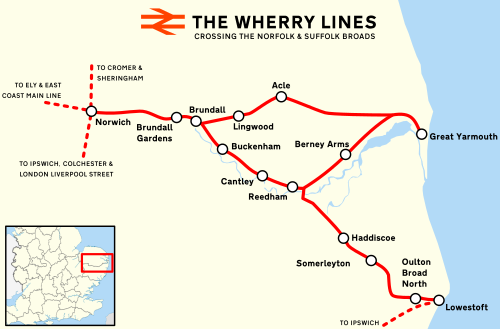
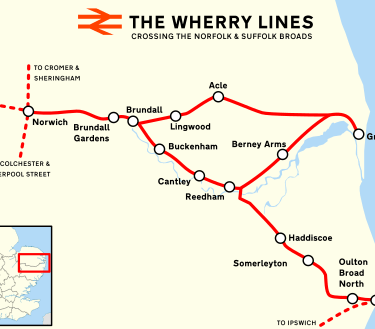
The Wherry Lines Ale Track is a unique rail ale trail that combines scenic train travel with visits to ten characterful pubs between Norwich, Great Yarmouth and Lowestoft. Launched by the local Community Rail Partnership in the late 2000s, this scheme encourages travellers to hop on and off the train to enjoy real ales at pubs near the stations along the Wherry Lines – the historic railway routes threading through the Norfolk Broads. Each participating pub is easily accessible from a station (hence “ale track”), and many even offer special discounts to anyone showing a valid train ticket. The result is an ale lover’s adventure that’s also perfect for rail enthusiasts and sightseers, showcasing the best of Norfolk’s landscape and pub culture in one memorable trip.
A Journey Through the Norfolk Broads by Train
Riding the Wherry Lines is a treat in itself, even before you factor in the pubs. Trains depart from Norwich, a city steeped in history and once said to have “a pub for every day of the year” – a fitting starting point for an ale trail. From there, the railway heads east into the Norfolk Broads, a region of tranquil waterways, marshes and windmills. The line is often hailed as one of the scenic rail routes in England. As you gaze out the window, you’ll travel along river banks and through windswept marshes said to have inspired Charles Dickens’ prose, passing reed beds and broadland villages that seem frozen in time. In spring and summer, keep an eye out for wildlife – you might spot herons in the dykes or even a flash of a kingfisher. In the distance, the sails of an old drainage windmill may peek above the reedbeds, completing the postcard-worthy scene.
One of the pleasures of the Ale Track is that you can alight at small country stations to visit a quaint rural pub for a bite or a pint, then hop back on the next train. The Wherry Lines themselves form a Y-shaped network: trains from Norwich split into two branches – one heading north-east to Great Yarmouth on the coast (via Acle), and the other heading south-east to Lowestoft (via Reedham). Both branches are covered by the Ale Track scheme, giving you two possible directions of exploration. You could, for example, ride all the way to the seaside and finish your day by the beach in Yarmouth or Lowestoft, or break the journey into segments, sampling pubs at intermediate stops. The flexibility is part of the fun. Trains typically run hourly on these routes, so with a bit of planning you can time your pub stops without feeling rushed. It’s worth grabbing a timetable or using a journey planner app to co-ordinate your itinerary, since departure times aren’t exactly on the hour every hour.
Notably, the Wherry Lines have a rich railway heritage. Much of the line dates back to the mid-19th century (it officially opened in 1844), and you’ll cross historic structures like the Reedham Swing Bridge – a vintage swing bridge over the River Yare that occasionally opens for boat traffic. As you approach Reedham, you might even see the little chain ferry crossing the river – a charming oddity that’s one of the last of its kind. The train journey offers a real sense of old-fashioned travel, especially knowing these tracks were once vital links for transporting wherries (traditional sailing barges) and holidaymakers to the Broads. Today, Greater Anglia’s modern trains run on the line (new Swiss-built Class 755 trains with big windows and modern comforts), ensuring a smooth ride as you soak in panoramic views of the Broads National Park. Whether you’re a railway buff admiring the signalling and station architecture or simply a casual traveller enjoying the landscape, the journey is as much a highlight as the destinations.
Pubs Along the Line – Real Ale and Local Character
Of course, the stars of the Ale Track are the pubs themselves. In total, ten pubs participate in the Wherry Lines Ale Track scheme, each brimming with local character and, naturally, quality beer. These aren’t just convenient station bars – they’re proper Norfolk pubs ranging from village inns to historic taverns, all within walking distance of the railway. The idea is to give rail travellers a flavour of Norfolk hospitality at its best. Here’s a tour of what awaits:
Brundall – Shortly after leaving Norwich, Brundall is one of the first stops where ale awaits. Right by Brundall station, you’ll find The Yare pub practically on the doorstep (about 70 metres from the platform). This traditional pub is named after the River Yare and offers a chance for a quick pint in a cosy setting before you even properly leave the Norwich suburbs. With its location “directly across the car park”, The Yare is an easy and popular starting point for many ale trailers – you can hop off, grab a well-kept ale and be back on the next train without breaking a sweat. It serves food as well, so you might consider timing a lunch here. The vibe is that of a community local; don’t be surprised if you end up chatting with regulars about the day’s plans.
Brundall Gardens – Just one stop further, Brundall Gardens station serves a more residential area, but about a 10-minute walk away is The Ram Tavern. This pub, located roughly 900m from the station in the direction of Postwick Lane, is set near the edge of the village. It’s a no-frills establishment that leans more toward a classic lager pub atmosphere. Real ale is available (usually a couple of standard bitters on tap), but The Ram is perhaps the least “ale-focused” of the bunch on this trail. If you’re a completist, you might stop in for a half pint just to say you did, but many ale enthusiasts choose to save their thirst for the more distinctive pubs ahead. On the plus side, visiting The Ram gives you a short walk through Brundall’s leafy garden suburb – a pleasant stroll especially on a nice day. Consider it a palate cleanser before the richer experiences to come.
Cantley – Heading further into the Broads, Cantley station is next, and it’s home to The Reedcutter, one of the most conveniently located pubs on the line. Only about 260 metres from the platform (practically a 2–3 minute stroll), The Reedcutter sits by the riverside and welcomes rail passengers with a spacious interior and broad menu. This pub has a bit of everything: a dining room for hearty meals, a traditional bar area (complete with a pool table for some friendly games), and often a good selection of ales on tap. It’s the kind of place where you could easily linger for an extra pint – in fact, one ale trail group noted they liked it so much they stayed for a second round. If you’re getting peckish by this point, The Reedcutter’s kitchen serves classic pub grub. Many visitors praise the quality of the food; you might see locals tucking into fish and chips or a ploughman’s lunch. On a sunny day, take your pint to their riverside beer garden if available, and watch boats glide by on the adjacent River Yare. Cantley’s backdrop is dominated by a landmark sugar factory (you’ll notice the silos and maybe a sweet scent in the air), but at the pub you’re focused on your pint and the pastoral views. Overall, The Reedcutter provides a comforting, “proper pub” stop that balances beer and food nicely.
Reedham – The village of Reedham is a real highlight of the Wherry Lines, boasting not one but three pubs within an easy walk of the station. If you’re following the Lowestoft branch of the trail, Reedham is a must-stop, as it offers a chance to potentially sample multiple pubs in one stop – a mini crawl within the crawl! From Reedham station, it’s about a 10–15 minute walk into the heart of the village where the pubs cluster along the riverfront. The route is straightforward: you leave the station and cross over the railway, then follow the road downhill toward the river. Soon enough you’ll hit Reedham’s riverside quay on the River Yare, where pubs await.
The three choices here are The Ship, The Lord Nelson, and The Ferry Inn. Each has its own charm and history. The Ship is a large, pleasant riverside pub right by Reedham’s swing bridge. On a summer day, its outdoor benches afford views of boats cruising past and the occasional opening of the swing bridge for river traffic. Beer-wise, The Ship usually offers a rotating range – one ale trail report found four different ales available on tap and all of good quality. It doesn’t serve food, focusing instead on being a welcoming watering hole for locals and visitors. You’ll often find boaters moored up here as well, since Reedham is a popular stop for those navigating the Broads.
Just a stone’s throw away is The Lord Nelson, a pub housed in a characterful old building with a prime riverside position. The Lord Nelson has been listed in CAMRA’s Good Beer Guide in the past, signifying its importance as a real ale venue. It offers food (traditional pub fare) and plenty of seating inside and in its riverside garden. This pub has had ups and downs over the years – at one point some visitors noted issues with beer quality, but it has since come under new management and undergone refurbishments. Today, it’s reputed to be much improved, focusing on well-kept ales and a friendly atmosphere (and hopefully a more pleasant aroma – an early 2010s account humorously complained about the resident dog’s habits, a quirk likely long resolved!). In any case, the Lord Nelson remains a beloved local institution – after all, a pub with such a location and history always has the potential to be great. Many ale trailers still include it for its authentic charm and the chance to drink in a piece of Broads pub heritage.
Further along the river (a few minutes’ walk from the other two) is The Ferry Inn, which sits by the Reedham ferry crossing. This pub, dating to the 17th century, has bags of character – dark wooden beams, a snug bar, and an expansive beer garden by the water. The Ferry Inn does serve food and is known for it; some trail-goers have had lunch here and “thoroughly enjoyed it”. It’s also a bit of an entertainment hub, often providing traditional pub games – notably, a free darts board which can be a fun way to pass time with your group while you sip your ales. The staff get high marks for friendliness, and the beer selection is generally solid with well-kept pints. If weather permits, sitting outside affords a peaceful view of the river and marshes (just watch out for the local ducks angling for a snack). Reedham’s Ferry Inn really gives you that “deep in the country” feel – especially if you see the little chain ferry hauling a couple of cars across the river next door. It’s a scene unchanged for decades and utterly charming. Between the three Reedham pubs, you could easily justify spending a few hours in this village – just be careful not to miss the next train if you get too cosy!
Haddiscoe (St. Olaves) – Between Reedham and Lowestoft lies Haddiscoe station, which serves the hamlet of St. Olaves. This stop is for the dedicated, as the pub here – The Bell Inn – is the farthest walk of the Ale Track, about 1.7 km from the station (roughly a 20-minute walk). But if you don’t mind stretching your legs, it’s absolutely worth it. The Bell Inn is an award-winning 17th-century inn situated on the banks of the River Waveney, complete with its own moorings for boats and a gorgeous riverside garden. The walk from the station actually adds to the adventure: you’ll follow a country lane, cross the river on a road bridge, and arrive in the tiny village of St. Olaves where the pub stands by the old St. Olaves Bridge. Inside, The Bell Inn radiates traditional charm – low ceilings, wooden beams, and a friendly, family-run vibe. It’s renowned not just for its beer but also for its food. In fact, many consider it one of the best dining pubs on the trail, with “excellent food” that’s generously portioned and swiftly delivered. If you’ve paced your journey to hit lunchtime or dinner here, you won’t be disappointed by the menu, which features home-cooked British classics (the Sunday roast here draws locals from miles around). Beer-wise, The Bell usually offers a selection of real ales (often including local Norfolk brews) and keeps them very well – the combination of a tasty pint and a view of boats passing on the river is hard to beat. Given the slightly longer trek to reach it, The Bell Inn tends to be a more tranquil stop; you might pause here to rest your feet, enjoy a leisurely pint, and chat with the welcoming staff about the area. Plus, the riverside setting means you can watch the world drift by on the water – quintessential Norfolk Broads bliss. Just leave a little extra time to walk back to Haddiscoe station after; it’s a rural station with infrequent service, so you definitely don’t want to miss your train. (On the bright side, Haddiscoe is a request stop on the line – the conductor will be familiar with intrepid Ale Track walkers appearing out of breath from the Bell Inn!)
Somerleyton – Further along toward Lowestoft, Somerleyton station is next. This tiny station (virtually in the middle of fields) gives access to the model estate village of Somerleyton, famous for its Somerleyton Hall and gardens. A short walk north through woodland from the station (about 700–800m) brings you to The Duke’s Head pub. This is a classic country pub that serves the local community of Somerleyton and the surrounding area. The Duke’s Head has a lovely brick exterior and a cozy interior with a fireplace – it feels like the kind of pub you’d want to hunker down in on a winter’s day. They serve a good selection of ales (often including Adnams or other regional brews) and are known for good food as well, with an emphasis on locally sourced ingredients. Many Ale Track participants might skip Somerleyton if short on time (since it’s off the main road and the pub isn’t visible from the station), but that would be a shame. If you want the full experience of the Wherry Lines, Somerleyton offers “something for everyone”: not only a pub stop but also a bit of sightseeing – if you have time, Somerleyton Hall (a magnificent Victorian mansion with famous maze gardens) is about a mile from the pub and open to visitors in the summer. Even if you stick to the pub, the Duke’s Head’s garden is a fine spot to relax, and the village around you, with its thatched cottages and tidy green, is one of the prettiest in Norfolk. This stop really highlights how the Ale Track isn’t just about beer; it’s about exploring hidden corners of the county you might otherwise miss.
Lowestoft – At the eastern terminus of the line lies Lowestoft, a seaside town known for being the easternmost point in the UK. Lowestoft has a number of pubs, but the Ale Track scheme highlights The Triangle Tavern in particular. Tucked in Lowestoft’s town centre (about a 10-minute walk or a quick bus from the station), the Triangle Tavern is famous as the brewery tap for Green Jack Brewery, a local Suffolk brewer with a national reputation. For real ale aficionados, this pub is a pilgrimage site: it regularly serves the full range of Green Jack’s beers, from easy-drinking bitters to hearty strong ales, alongside guest ales and real ciders. It’s a lively but unpretentious tavern, split into two bars – one often featuring live music or jam nights, and the other a quieter snug with a pool table. The walls are adorned with brewery memorabilia and CAMRA awards, speaking to the pub’s pedigree in the ale world. A pint of Green Jack’s celebrated Ripper (an 8.5% barleywine that has a cult following) or their sessionable Trawlerboys Best Bitter might be the perfect capstone to your journey. The Triangle doesn’t do food, but you’re in town now with plenty of eateries around if you need a bite. Lowestoft itself offers classic seaside attractions – a sandy beach, a pier, and a maritime museum – so you could plan to end your ale trail by enjoying the sea breeze, perhaps with an ice cream or fish supper after all the ales. It’s a satisfying feeling to know you’ve crossed Norfolk by rail and sampled its hospitality along the way.
Great Yarmouth – If you took the other branch of the Wherry Lines (via Acle), your coastal terminus is Great Yarmouth, another historic seaside resort. Yarmouth’s station is a short walk from the town centre, and the recommended pub stop here is The St. John’s Head. This pub is a bit of a hidden gem, located on a quiet back street about 500m from Great Yarmouth station. St. John’s Head is a traditional free house known for well-kept ales and a friendly, no-nonsense atmosphere. It’s the sort of pub with vintage brewery signs on the walls, a resident pub cat dozing by the fire, and a clientele of local characters. Don’t expect flashy décor or gastro-food – it’s all about the beer and conversation here. The ale selection often includes local Norfolk brews and sometimes a mild or porter alongside bitters. If you arrive in Yarmouth earlier in the day, you might find other pub options as well (the town has a few Good Beer Guide entries), but St. John’s Head is a solid pick to experience an old-school Yarmouth pub that’s unchanged by the tourist tackiness on the seafront. After your pint, you can stroll to the Golden Mile (arcades, fish and chips, and the beach) or visit the historic quayside and Nelson’s Museum if you’re inclined – like Lowestoft, Great Yarmouth offers a satisfying end-point with plenty to do (or you can simply catch the next train back to Norwich if time is short).
Intermediate Stops (Lingwood & Acle) – On the Acle line to Yarmouth, there are a couple of other stations worth mentioning. Lingwood is a small village where The King’s Head pub sits practically next to the station (on Station Road) – an easy quick stop if you want to experience a village local. And at Acle, a larger Broads village, you’ll find pubs like The King’s Head Inn (yes, another King’s Head – not to be confused with Lingwood’s) and the Hermitage. Acle’s pubs are about 10 minutes’ walk from the station into the village centre. Many ale trailers bypass Acle in favour of pressing on to Yarmouth, but if you have time, Acle’s pubs offer a warm welcome and often some regional ales (Adnams, Woodforde’s, etc.) on tap. Acle is also known for its river access – if you fancy a detour, the Acle Bridge Inn is about 1.5 miles from the station on the riverbank, though that’s too far for the casual walker on a tight schedule. Generally, Lingwood and Acle provide additional flexibility: you might use them to break up the journey or as alternatives if one of the other pubs on the line is closed when you pass through.
No matter which stops you choose, each pub on the Ale Track has its own story and vibe. What unites them is their commitment to real ale and their proximity to the railway, making it easy for you to enjoy a pint and then be safely on your way – no car needed. Many of these pubs are featured in CAMRA guides or have won local awards, and you’ll often notice CAMRA certificates proudly displayed inside. The landlords are generally very supportive of the rail ale concept – don’t be shy to mention you came by train on the Ale Track, and you’ll likely get a knowing smile (and maybe a discount on your pint, as several pubs give 10–20% off for rail ticket holders). The atmosphere you’ll encounter ranges from lively town pubs to quiet countryside inns, but in all cases, expect a friendly welcome. Norfolk folk are proud of their pubs, and love to chat – you might leave not only with a pleasant beer buzz but also a few new acquaintances or local tips.
Tips for Planning Your Ale Trail Adventure
Taking on the Wherry Lines Ale Track is meant to be fun and relatively carefree, but a little planning goes a long way in making sure your day (or weekend) goes smoothly. Here are some practical tips and things to consider:
Tickets and Schedules: For maximum flexibility, grab a Wherry Line Ranger ticket. This day rover costs about £13.50 for an adult and offers unlimited travel on the Wherry Lines for the day. It’s excellent value, considering the distances involved and the freedom to hop on and off at will. If you’re travelling with family or friends, there’s also a Ranger group ticket available, and railcard holders may save even more. Trains generally run every hour on each branch, but note that not every train stops at the smaller stations (request stops like Haddiscoe or Buckenham, for instance, are infrequent). Check the timetable for departure times from the stations you plan to use – a missed train could mean a long wait in some of these sleepy locales. If you have a smartphone, the Greater Anglia app or National Rail app will be handy for live schedules. Also, be aware of the last train times in the evening: if you linger in Lowestoft or Yarmouth until closing time at the pub, make sure you haven’t missed the final train back (or arrange for alternative transport).
Pacing and Selection: With ten pubs on the official roster (and even more possible if you included others along the way), it’s ambitious to hit them all in one go. Many people split the Ale Track into two trips – one for the Lowestoft side, one for the Yarmouth side – or they pick a handful of must-visit pubs and focus on those. Remember, this is about enjoyment, not endurance. A recommended approach for a single day might be: Norwich -> Cantley (Reedcutter) -> Reedham (pub crawl among Ship/Nelson/Ferry) -> Somerleyton (Duke’s Head) -> Lowestoft (Triangle Tavern) and then back to Norwich. That gives a nice mix of 5–6 pubs with scenic rides in between. If you’re doing the Yarmouth branch: Norwich -> Brundall (Yare) -> Lingwood (King’s Head) -> Acle (pub in village) -> Great Yarmouth (St. John’s Head). Tailor it to your preferences (for instance, if you’re big on brewery taps, don’t miss the Triangle; if you love riverside pubs, prioritise Reedham and St. Olaves). It’s a good idea to start late morning to give yourself plenty of daylight travel time – plus, pubs typically open by noon, and you can always begin with lunch at an early stop.
Pub Opening Times: Speaking of opening times, note that some rural pubs have limited hours, especially outside of peak summer season. Many village pubs open only at lunchtime and then again in the evening, often closing for a few hours in the afternoon. For example, a pub might open 12–3 PM, then 6–11 PM. On Sundays, hours can be shorter (and food service may end mid-afternoon). It’s wise to double-check current opening times for the key pubs you plan to visit – most have Facebook pages or websites with up-to-date hours. Nothing is worse than trudging from a station to find the pub door locked! If a pub is closed when you arrive, you might adjust on the fly: either wait until it opens (if it’s a short gap and you’re not in a rush) or catch the next train to a different stop that’s open. The beauty of having a rover ticket is you have options.
Food and Snacks: While the focus is ale, remember to eat! Fortunately, several Ale Track pubs serve excellent food, and it’s part of the experience to sample it. You could plan a hearty lunch at The Reedcutter or The Bell Inn – both known for quality meals – or perhaps a mid-afternoon snack at one of the Reedham pubs (some do light bites even between meal times). If your schedule means you’re not at a pub during serving hours, consider packing some snacks or grabbing a bite in Norwich before departure. Staying nourished will help you keep going and moderate the alcohol. And of course, drink water in between pints – especially on warm days when the beer garden is calling. Pace yourself and you’ll enjoy each stop all the more.
Group Size and Etiquette: The Ale Track can be done solo, as a couple, or in a group. If you’re organising a group (say a birthday outing or, as one story goes, a stag do on the Ale Trail), keep in mind the pubs on this route are mostly small, community places. Large rowdy groups or fancy-dress pub crawls are not really in the local spirit and could be frowned upon. It’s best to split larger parties into smaller clusters or visit at off-peak times to avoid overwhelming any one venue. The idea is to integrate into the local atmosphere, not take it over. That said, the pub staff and regulars along the Wherry Lines are very welcoming – they enjoy seeing new faces arriving by train and are likely to strike up conversations, asking what you think of their village or offering travel tips. Embrace that social aspect; it’s a big part of what makes a country pub crawl special compared to anonymously drinking in a city. Be respectful, don’t push for service if a pub is clearly busy serving lunch diners, and always thank the staff – you might be an unusual customer (not everyone walks in from a train with a rail timetable in hand!), and a little courtesy goes a long way. If you’re visibly doing the Ale Trail (e.g., holding a leaflet or wearing a CAMRA t-shirt), you might even get locals asking you about it – enjoy those chats! Also, drink responsibly: this is a marathon, not a sprint. The goal is to savour the beers, not end up sozzled on the 7PM train. By keeping it moderate at each stop (maybe a half pint occasionally, or a water in between), you’ll remain cheerful and clear-headed enough to appreciate the journey.
Accessibility and Comfort: One of the great advantages of a rail ale trail is that nobody has to drive – it’s a safe way for everyone to partake in the merriment. The trains on the Wherry Lines are modern and fully accessible, with level-boarding available for wheelchairs and buggies, and facilities on board. Many of the stations are also step-free or have ramps (though a couple of tiny halts like Buckenham are very basic). The term “accessible pubs” in the Ale Track context means they are accessible by public transport, but if anyone in your group has mobility issues, it’s worth noting that most of these pubs are on flat terrain and in some cases directly adjacent to the station (e.g., Brundall, Lingwood). The longest walk, to the Bell Inn, is along paved roads and manageable with a wheelchair if someone can assist (the pub itself has an accessible entrance via the garden). In general, you’ll find the pubs accommodating – this is a laid-back part of the world. Dress for comfort: casual attire and good walking shoes are recommended, since you’ll be tramping through rural stations and possibly across grassy paths (especially at Reedham, where there’s a short footpath shortcut that can be muddy). Bring an extra layer or waterproof if the forecast is iffy, as coastal weather can change quickly. And if it’s a sunny summer day, don’t forget sunscreen – you might be spending more time outdoors than you realise, whether on station platforms or pub gardens.
Beyond Beer: While ale is the focus, the Ale Track is deliberately crafted to have something for everyone. If someone in your party isn’t a beer drinker, that’s no problem – all these pubs offer alternatives like cider, wine, spirits, or non-alcoholic drinks (Norfolk’s own apple juices and locally made soft drinks can be quite nice). The outing can still be great fun for them due to the scenery and social aspect. Additionally, the route offers plenty of sightseeing opportunities. You could incorporate a visit to Norwich (with its cathedral and market) at the start, a stroll at Acle to see the medieval church, a peek at Berney Arms (an utterly remote station in the marshes – trains only sometimes stop there, but it’s a point of interest for rail fans and walkers), or a tour of Somerleyton Hall as mentioned. Nature lovers might want to hop off at Buckenham station (on certain weekend services) to explore the RSPB nature reserve there – it’s a birder’s paradise on the marsh, albeit with no pub except perhaps a flask you carry. The key is, don’t think of it solely as a pub crawl – it’s a full Norfolk Broads experience. You’ll get a dose of local culture, history, nature, and yes, some excellent pints along the way. By the end of the journey, you’ll likely have a deeper appreciation for rural Norfolk – its relaxed pace of life, its friendly communities, and the simple pleasure of enjoying a beer in an old village pub as the train you arrived on clatters off into the distance.
Overall Impression: A Memorable Ale Adventure in Norfolk
The Wherry Lines Ale Track delivers a truly special blend of travel, scenery, and beer that is hard to find anywhere else. It’s not just a pub crawl and not just a train ride – it’s a fusion of the two, enriched by the unique character of the Norfolk Broads. Where else can you hop on a train, ride through postcard-perfect wetlands, step off at a tiny station and walk straight into a 300-year-old pub to sip a pint of local ale? Then do it all over again at the next stop, each time with a completely different setting and story? This trail really showcases the best of British pub culture and railway heritage working in harmony. It’s also an environmentally friendly way to explore – leaving the car behind and using the train to link your adventure reduces traffic and lets you fully relax between pubs.
Patrons who have done the Ale Track often rave about how varied and satisfying the experience is. In one day, you might chat with a landlord who’s been running his pub for decades, meet a brewer pulling pints in his brewery taproom, enjoy the calm of a riverside beer garden, and laugh with locals at a village bar – all the while surrounded by the beauty of the Broads. The pacing of a rail ale trail, with gentle train interludes, means you never feel too hurried or too idle: there’s always another vista around the bend or another pub to look forward to just when you’re ready for the next. And importantly, it’s safe and convenient – no arguing over who’s the designated driver, no navigating unknown lanes after a pint; the train is your trusty chaperone.
The Ale Track scheme itself appears to be well-managed in partnership with the pubs and the railway. The fact that participating pubs offer discounts for rail users shows a spirit of cooperation aimed at encouraging sustainable tourism and supporting local businesses. It’s a win-win: the railway gets extra riders, the pubs get extra custom, and we visitors get an unforgettable day out. It’s clear that this initiative has been thought through to ensure everyone has a good time – from suggestions of which pubs to visit, to providing the affordable Ranger ticket, to the community vibe you’ll encounter at each stop.
Is there anything to be mindful of? Just the obvious: if you attempt to visit all ten pubs in one go, you’ll be very pressed for time (and your liver might protest!). The trail is best savoured, not rushed. Also, rural trains and pubs aren’t 24/7 operations – a bit of planning around timetables and opening hours prevents any minor hiccups. But these are small considerations in an otherwise brilliantly conceived adventure. Compared to some more infamous ale trails elsewhere (which have suffered from overcrowding or rowdy behaviour), the Wherry Lines Ale Track has remained a civilised and charm-filled affair – perhaps owing to its off-the-beaten-path nature and the gentler ambiance of the Broads. Here, it’s more about clinking glasses in a time-worn tavern or watching a sunset over the marshes from a pub garden, rather than party antics.
All in all, the Wherry Lines Ale Track is a fantastic option for beer aficionados, railway enthusiasts, and curious explorers alike. Whether you’re a CAMRA member ticking off historic pubs, a group of friends seeking a weekend adventure, or a couple looking for a novel day out in the countryside, this trail offers something for everyone. By the end of the journey, you’ll likely have a collection of photos – pints on bartops, trains at tiny stations, maybe a selfie with a life-size pub sign of Lord Nelson – and, more importantly, a collection of stories. Perhaps you’ll recall the laughter shared with some regulars in Reedham, or the taste of that Green Jack ale right from the source, or the sight of a majestic heron taking flight as your train glided past Buckenham Marshes. These are the kinds of memories the Ale Track delivers.
The Wherry Lines Ale Track is a full-day (or multi-day, if you prefer) escapade that encapsulates what Norfolk is all about: relaxed pace, natural beauty, warm hospitality, and great beer. It’s an experience where the journey is just as enjoyable as the destinations. So, grab your rail pass, bring your thirst for adventure (and ale), and set off on a rail-and-ale odyssey across the Norfolk Broads – it’s bound to be one for the books.
© 2026. All rights reserved. All other trademarks and copyrights are the property of their respective holders.
Please drink responsibly. This website promotes pub culture and community responsibly. If you or someone you know needs support, visit https://www.drinkaware.co.uk